
Main ingredients of the product: Diallyl disulfide, diallyl trisulfide.
Product efficacy: Allicin serves as an antibacterial and growth promoter with advantages such as a wide application range, low cost, high safety, no contraindications, and no resistance.Specifically includes the following:
(1) Broad-spectrum antibacterial activity
Exhibits strong bactericidal effects against both gram-positive and gram-negative bacteria, significantly preventing dysentery, enteritis, E. coli, respiratory diseases in livestock and poultry, as well as gill inflammation, red spots, enteritis, and hemorrhage in aquatic animals.
(2) Palatability
Allicin has a natural flavor that can mask feed odor, stimulate intake, and promote growth. Numerous trials show that allicin can increase egg production rate in laying hens by 9% and improve weight gain in broilers, growing pigs, and fish by 11%, 6%, and 12%, respectively.
(3) Can be used as an antifungal agent
Garlic oil inhibits molds such as Aspergillus flavus, Aspergillus niger, and Aspergillus brunneus, effectively preventing feed mold disease and extending feed shelf life.
(4) Safe and non-toxic
Allicin leaves no residue in the body and does not cause resistance. Continuous use can help fight viruses and increase fertilization rate.
l Product applications
(I) Birds
Due to its excellent antibacterial properties, allicin is widely used in poultry and animal applications. Studies show that adding allicin to poultry diets has significant benefits in improving growth performance and immunity. (* represents significant difference compared to control group; ** represents highly significant difference compared to control group, same below)
Table 1 Effects of allicin supplementation on poultry immune indicators
|
IgA (ng/L) |
IgG (ug/L) |
IgM (ng/mL) |
LZM (U/L) |
β-DF (ng/L) |
|
|
CON |
4772.53±94.45 |
45.07±3.07 |
1735±187.58 |
21.53±1.67 |
20.03±0.92 |
|
CCAB |
8585.07±123.28** |
62.06±4.76** |
2756.53±200.37** |
28.02±0.68* |
22.51±1.26* |
Table 2 Effects of allicin supplementation on poultry growth performance
|
Body weight (g) |
|||||
|
Age |
1D |
7D |
14D |
21D |
28D |
|
CON |
41.36 ± 0.97 |
60.19 ± 2.61 |
131.30 ± 2.60 |
208.07 ± 2.60 |
318.02 ± 5.70 |
|
CCAB |
44.15 ± 0.81* |
64.53 ± 3.91* |
137.02 ± 2.68 |
235.6±0.68** |
377.93 ± 6.75** |
|
Tibial length (mm) |
|||||
|
CON |
28.28 ± 0.41 |
33.25 ± 1.25 |
42.86 ± 0.46 |
52.43 ± 0.46 |
59.16 ± 0.78 |
|
CCAB |
30.71±0.26** |
34.09 ± 0.84* |
46.39 ± 0.47** |
57.71± 0.47** |
66.52 ± 0.68** |
(II) Pigs
Appropriate use of allicin in weaning piglets can reduce diarrhea rates. Adding 200 mg/kg of allicin in growing and finishing pigs significantly improves growth performance, meat quality, and slaughter performance.
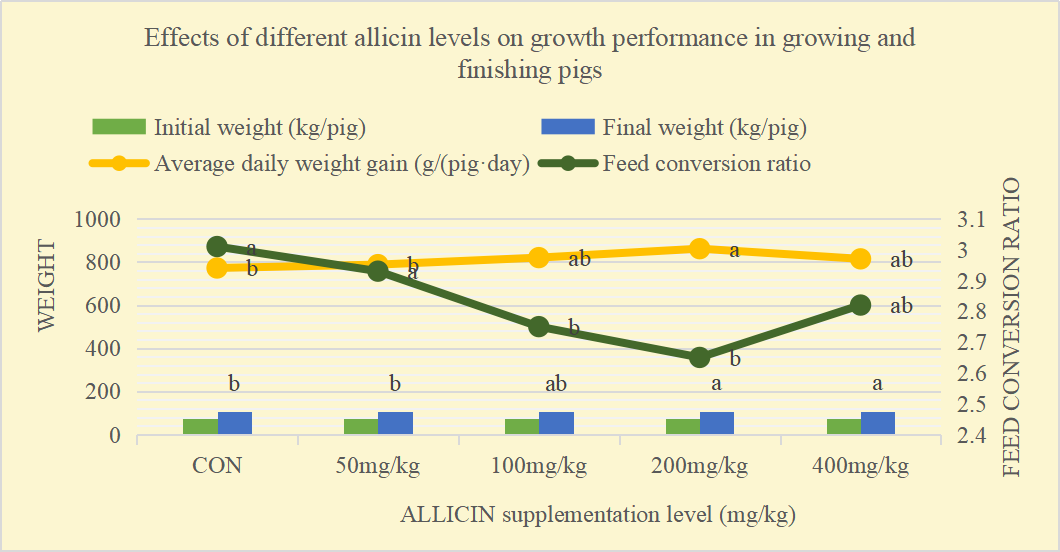
Figure 1 Effects of different allicin levels on growth performance in growing and finishing pigs
(III) Ruminant animals
Allicin continues to play an antibiotic-replacement role in ruminant farming. Adding 5g/kg, 10g/kg, and 15g/kg of allicin to Holstein calf diets over 30 days showed improved immune function through elevated levels of serum immunoglobulin and anti-inflammatory factors.
Table 3 Effects of different allicin levels on Holstein calf serum immune indicators
|
Index |
CON |
5g/kg |
10g/kg |
15g/kg |
|
IgA (g/L) |
0.32 |
0.41 |
0.53* |
0.43 |
|
IgG (g/L) |
3.28 |
4.03 |
4.84* |
4.74* |
|
LgM (g/L) |
1.21 |
1.84 |
2.31* |
2.05 |
|
IL-2 (ng/L) |
84.38 |
85.32 |
84.95 |
85.37 |
|
IL-6 (ng/L) |
63.18 |
62.09 |
61.73 |
61.32 |
|
IL-10 (ng/L) |
124.21 |
152.19* |
167.27* |
172.19* |
|
TNF-α (ng/L) |
284.19 |
263.17 |
237.08* |
221.93* |
(IV) Aquatic animals
As a sulfur-containing compound, allicin has been extensively researched for its antibacterial and antioxidant properties. Adding allicin to the diets of large yellow croaker promotes intestinal development and reduces inflammation, thereby improving survival and growth.
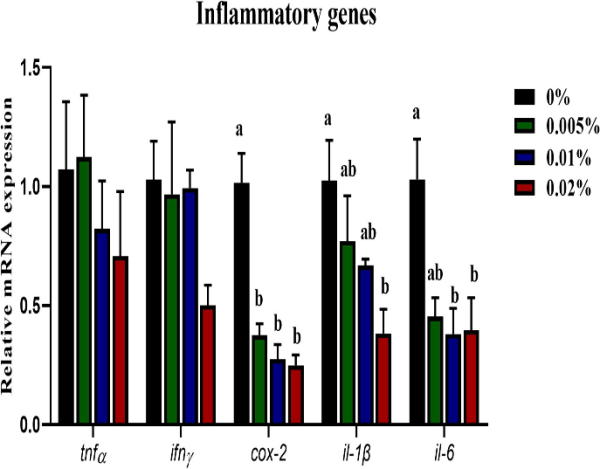
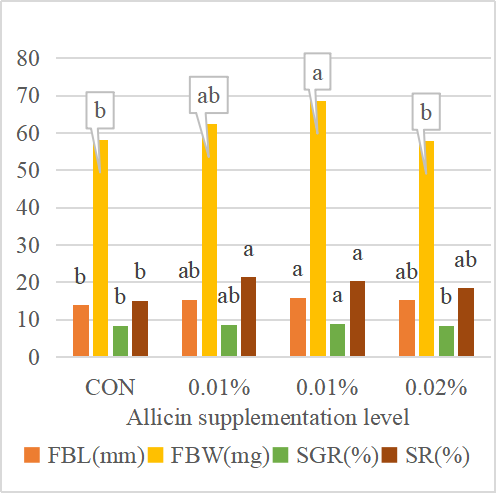
Figure 2 Effects of allicin on expression of inflammatory genes in large yellow croaker Figure 3 Effects of allicin supplementation levels on growth performance in large yellow croaker
Recommended dosage: g/T mixed feed
|
Content 10% (or adjusted according to specific conditions) |
|||
|
Animal Type |
Palatability |
Growth Promotion |
Antibiotic Replacement |
|
Chicks, laying hens, broilers |
120g |
200g |
300-800g |
|
Piglets, finishing pigs, dairy cows, beef cattle |
120g |
150g |
500-700g |
|
Grass carp, carp, turtle, and African bass |
200g |
300g |
800-1000g |
|
Content 25% (or adjusted according to specific conditions) |
|||
|
Chicks, laying hens, broilers |
50g |
80g |
150-300g |
|
Piglets, finishing pigs, dairy cows, beef cattle |
50g |
60g |
200-350g |
|
Grass carp, carp, turtle, and African bass |
80g |
120g |
350-500g |
Packaging: 25kg/bag
Shelf life: 12 months
Storage: Keep in a dry, ventilated, and sealed place.
For more information, visit our website at [https://www.sustarfeed.com/].
mail:elaine@sustarfeed.com WECHAT/HP/What’ sapp:+86 18880477902
Post time: Apr-09-2025


