
Trace Elements Market Analysis
I,Analysis of non-ferrous metals
Week-on-week: Month-on-month:
| Units | Week 4 of December | Week 1 of January | Week-on-week changes | December average price | The average price for the 4th day up to January | Month-on-month changes | Current price on January 6 | |
| Shanghai Metals Market # Zinc ingots | Yuan/ton |
23086 |
23283 |
↑197 |
23070 |
23283 |
↑213 |
24340 |
| Shanghai Metals Network # Electrolytic copper | Yuan/ton |
94867 |
99060 |
↑4193 |
93236 |
99060 |
↑5824 |
103665 |
| Shanghai Metals Network AustraliaMn46% manganese ore | Yuan/ton |
41.85 |
41.85 |
- |
41.58 |
41.85 |
↑0.27 |
41.85 |
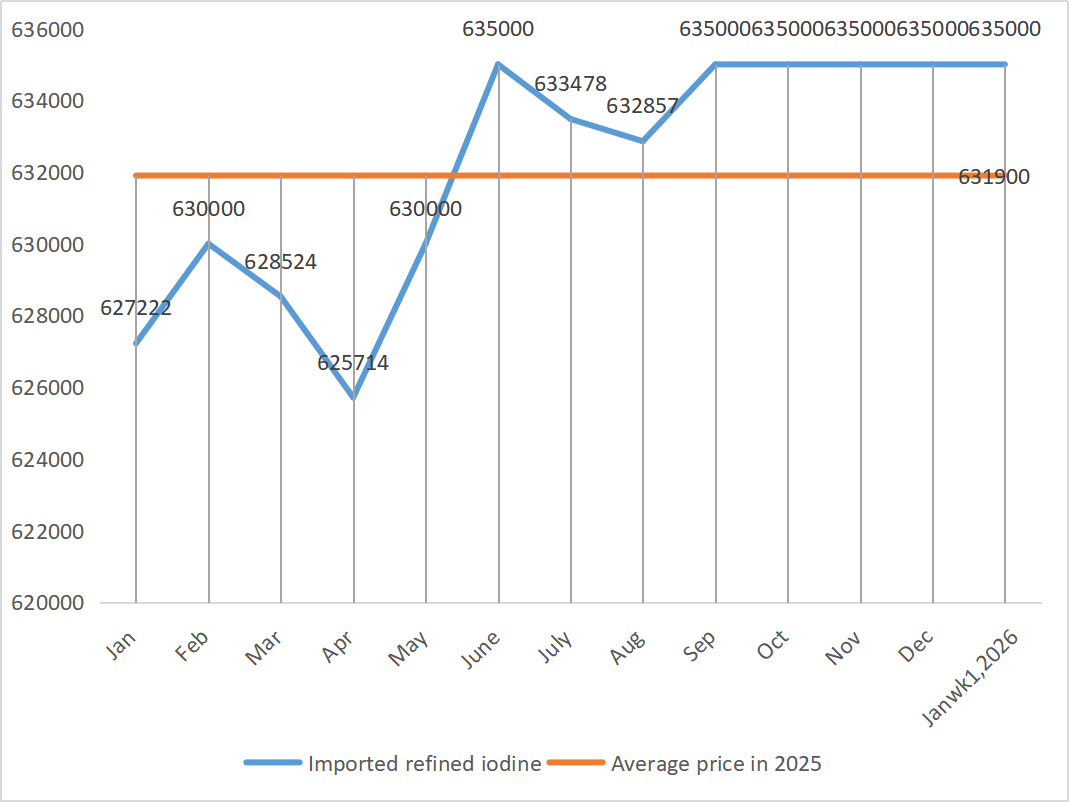
| The price of imported refined iodine by Business Society | Yuan/ton |
635000 |
635000 |
- |
635000 |
635000 |
- |
635000 |
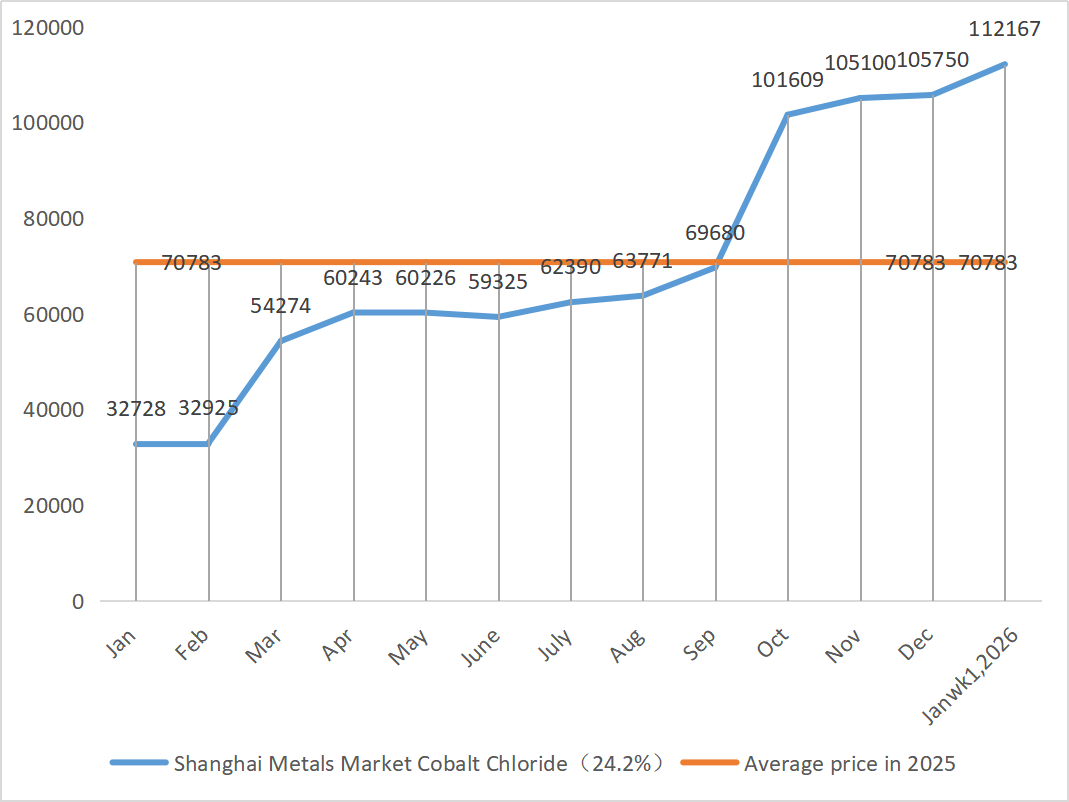
| Shanghai Metals Market Cobalt Chloride(co≥24.2%) | Yuan/ton |
110770 |
112167 |
↑1397 |
109135 |
112167 |
↑3032 |
113250 |
| Shanghai Metals Market Selenium Dioxide | Yuan/kilogram |
115 |
117.5 |
↑2.5 |
112.9 |
117.5 |
↑4.6 |
122.5 |
| Capacity utilization rate of titanium dioxide manufacturers | % |
74.93 |
76.67 |
↑1.74 |
74.69 |
76.67 |
↑1.98 |
1)Zinc sulfate
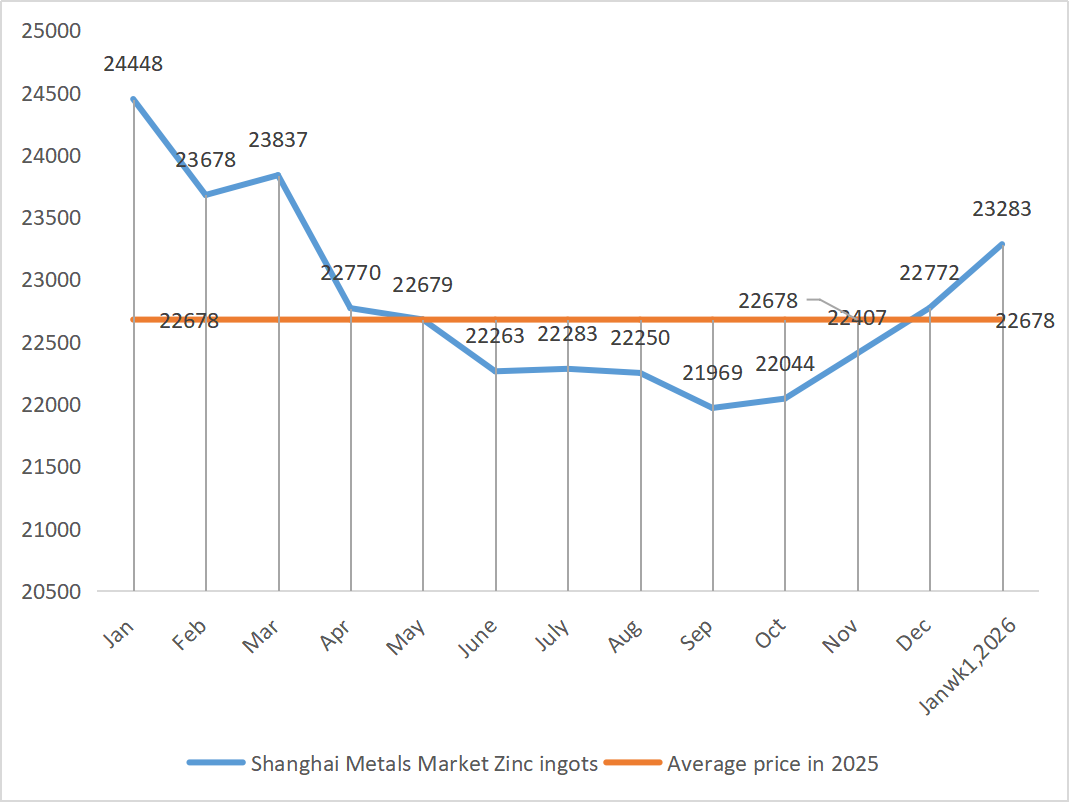
① Raw materials: Secondary zinc oxide: Zinc prices climbed to a nearly 9-month high, and the supply shortage of secondary zinc oxide eased somewhat, but manufacturers’ quotations remained relatively firm, putting continuous pressure on the cost side of enterprises.
Zinc price: Macro: Whether consumption can perform better than expected under the 26-year trade-in policy is the dominant factor. On the fundamentals, due to the recent high prices of minor metals such as silver, smelters’ production enthusiasm has increased. Output is expected to rise by more than 15,000 tons month-on-month in January. On the consumption side, consumption is expected to recover as environmental protection measures are lifted in some regions. Driven by macroeconomic warming, zinc prices are expected to remain at around 23,100 yuan per ton next week
② Sulfuric acid: Market prices will remain stable this week.
This week, the production of zinc sulfate monohydrate showed a trend of “higher operating rate and lower capacity utilization rate”. The industry’s overall operating rate was 74%, up 6 percentage points from the previous week; Capacity utilization was 65%, down 3 percentage points from the previous period. Demand remained strong, with major manufacturers’ orders scheduled until late January and some even until early February. High costs of core raw materials, coupled with abundant pending orders, provide rigid support for the current market price of zinc sulfate. To avoid tight delivery before the Spring Festival, customers are advised to purchase and stock up in advance at an opportune time.
2)Manganese sulfate
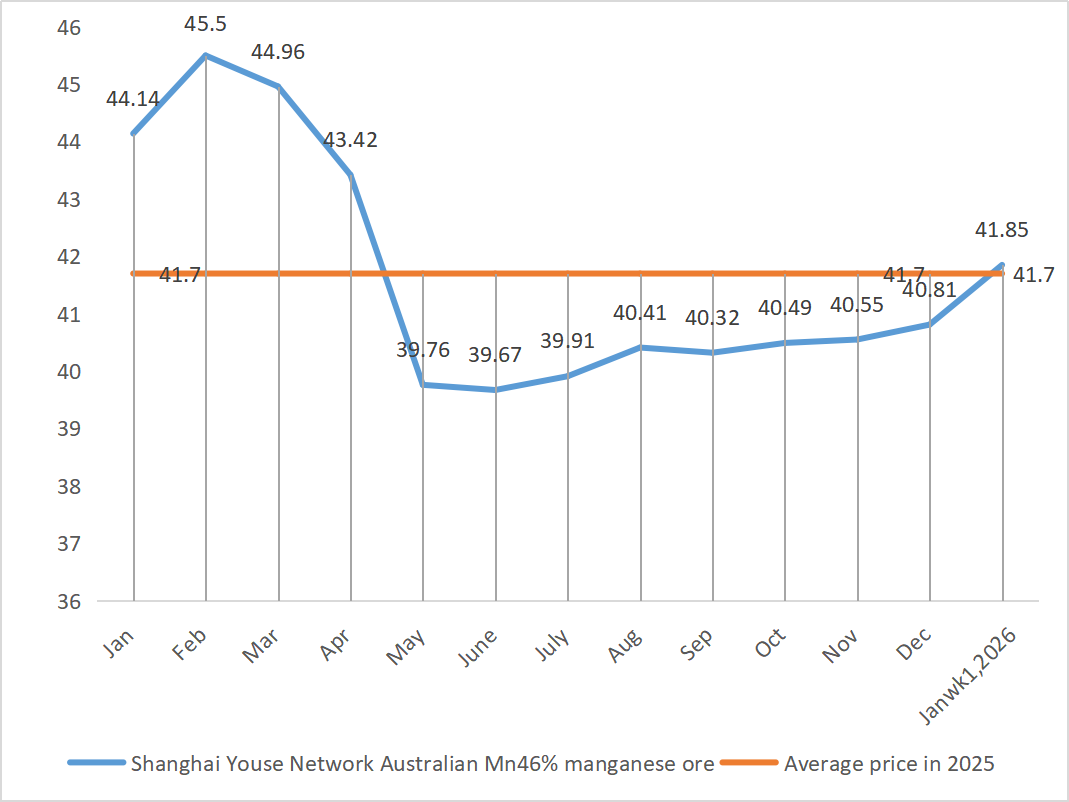
In terms of raw materials: ① Manganese ore prices continued to rise steadily with a slight increase at the end of the year
② Sulfuric acid prices remained high and stable.
This week, the operating rate of manganese sulfate producers was 75%, down 10% from the previous week; Capacity utilization was 53%, down 8% from the previous week. Major manufacturers’ orders are scheduled until late January, with some until early February, and shipping is tight. Cost and demand form the core support for the current price, and the direction of sulfuric acid prices is a key variable. If the upward trend continues, it will directly push up manganese sulfate prices through cost transmission. Based on the analysis of enterprise order volume and raw material factors, manganese sulfate is expected to remain firm in the short term. Customers are advised to purchase as needed.
3)Ferrous sulfate
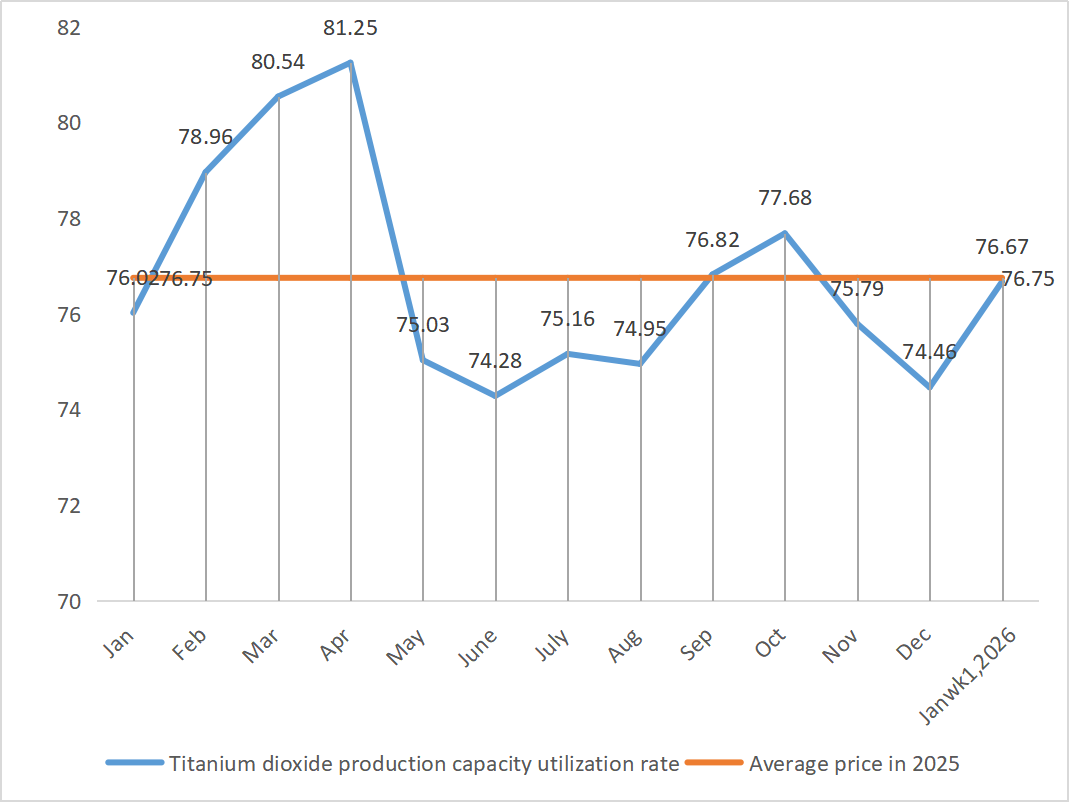
Raw materials: As a by-product of titanium dioxide, the supply of ferrous sulfate is directly constrained by the main industry. At present, the titanium dioxide industry is facing high inventories and off-season sales, and some manufacturers have shut down as a result, leading to a simultaneous reduction in the output of its by-product ferrous sulfate. Meanwhile, stable demand from the lithium iron phosphate industry continues to divert some raw materials, further intensifying the tight supply situation of feed-grade ferrous sulfate products.
This week, the ferrous sulfate industry has been operating at a low level continuously. As of now, the overall operating rate of the industry is only 20%, and the capacity utilization rate remains at around 7%, roughly the same as last week. As major manufacturers have no plans to resume production in the short term after New Year’s Day and existing orders are scheduled until mid to late February, the market supply is showing a continuous tightening trend. With cost support and bullish expectations, the price of ferrous sulfate is expected to rise in the medium to short term against the backdrop of strong raw material cost support and the suspension of quotations by major manufacturers. Buy and stock up at the right time based on your own inventory situation.
4)Copper sulfate/basic copper chloride
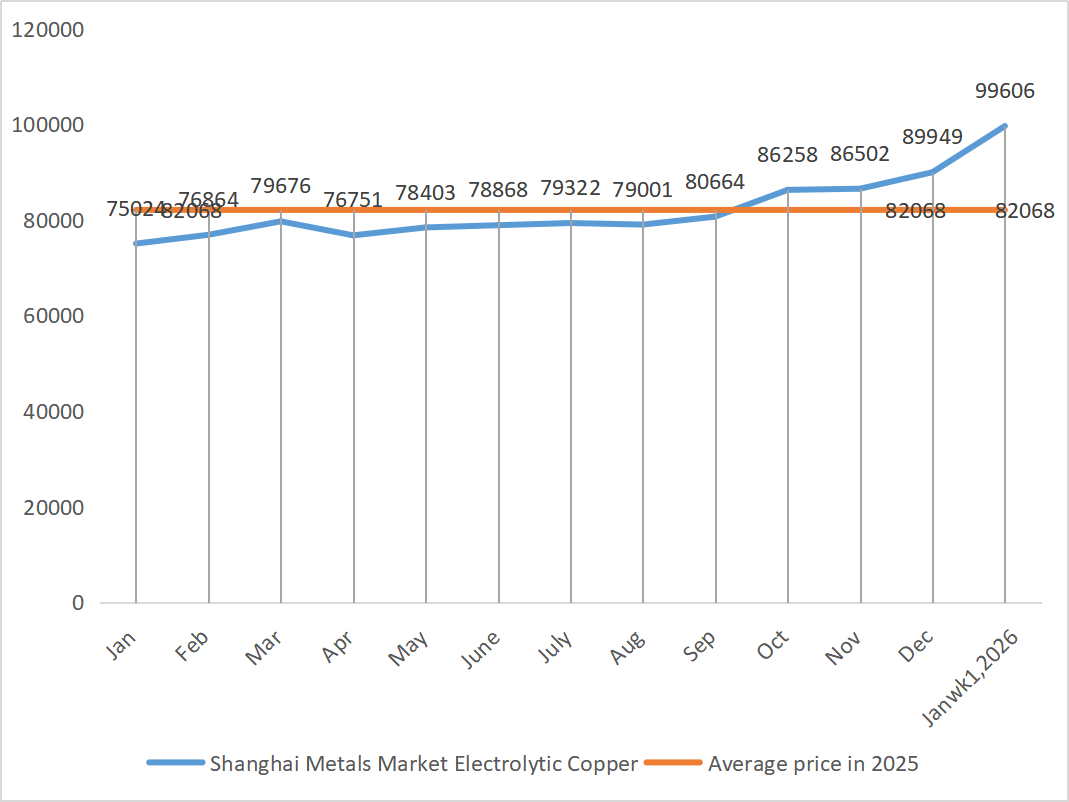
In 2025, the spot copper price showed a volatile upward trend. It was quoted at 73,830 yuan per ton at the beginning of the year and rose to 99,180 yuan per ton at the end of the year, an increase of 34.34% throughout the year. The highest price of the year broke through the 100,000 mark (101,953.33 yuan per ton on December 29), also the highest price in 15 years. The low point was 73,618.33 yuan per ton on April 8, with a maximum fluctuation of 37.27 percent.
The main reason for the rise:
1 There are frequent “black swan” events at the copper mine end, with production shrinking for the first time since 2020. In addition to force majeure factors such as earthquakes and mudslides, structural constraints have also become the main factor affecting the decline in copper supply, such as the decline in resource grade, insufficient capital expenditure, the slowdown in the approval of new projects, and environmental policy restrictions.
2 On the demand side, copper consumption has been much more resilient than expected, driven by both new energy and AI.
3. Due to the expected siphoning effect of US tariffs, the supply of refined copper from overseas non-US regions remains tight.
Fundamentals: The National Development and Reform Commission has halted 5% (about 2 million tons) of copper smelting capacity across the country, tightening supply; The “state subsidy” on the consumer side continues, with the first batch of 62.5 billion special Treasury bonds issued to boost the market.
At present, spot copper prices are at a high level. Downstream buyers are buying on demand, and the fear of high prices is obvious. Trading activity is expected to continue to decline by the end of the year. Overall, the low interest rate environment, domestic macro-policy regulation and supply disruptions provide medium-term support for copper prices, but the weak reality formed by weak spot trading remains upside resistance. Copper prices are expected to continue to fluctuate at high levels. Overall, it is expected that copper prices will fluctuate in the range of 100,000 to 101,000 yuan per ton next week.
Customers are advised to stock up at the right time when copper prices fall back to a relatively low level in light of their own inventories, and pay attention to the problem of inventory accumulation suppressing the upward trend.
5)Magnesium sulfate/magnesium oxide
In terms of raw materials: Currently, sulfuric acid in the north is stable at a high level.
Magnesium oxide and magnesium sulfate prices have risen. The impact of magnesite resource control, quota restrictions and environmental rectification has led to many enterprises producing based on sales. Light-burned magnesium oxide enterprises shut down on Friday due to capacity replacement policies and the increase in sulfuric acid prices, and the prices of magnesium sulfate and magnesium oxide rose in the short term. It is recommended to stock up appropriately.
6)Calcium iodate
The price of refined iodine rose slightly in the fourth quarter, the supply of calcium iodate was tight, some iodide manufacturers halted production and reduced production, the supply of iodide was tight, and it is expected that the tone of a long-term steady and small increase in iodide will remain unchanged. It is recommended to stock up appropriately.
7)Sodium selenite
In terms of raw materials: The selenium market was weak at the end of the year, with sluggish transactions. The price centers of crude selenium and secondary selenium shifted downward, while the prices of selenium powder and selenium ingots remained unchanged. Terminal restocking is coming to an end, speculative funds are on the sidelines, and prices are under short-term pressure. Buy on demand.
8)Cobalt chloride
Market trading remains rather sluggish, but the pattern of supply shortage has not changed. Raw material shortages have become the norm, traders’ and recyclers’ inventories are almost depleted, and the “surplus” of small and medium-sized smelters may not last until December to January next year. By contrast, the leading plants, having been actively buying and replenishing their inventories earlier, can basically guarantee supply for the first quarter of next year. The willingness to purchase cells downstream is relatively low. Prices will enter a new equilibrium state in the short term and remain stable in the near term.
9)Cobalt salts/potassium chloride/potassium carbonate/calcium formate/iodide
- Cobalt salts: The cobalt salts market has remained firm overall, supported by tight raw material supply, rising costs and strong downstream demand. In the short term, price fluctuations will be limited due to the year-end liquidity and demand rhythm, but in the medium to long term, with the growth of new energy demand and the continuation of supply constraints, cobalt salt prices still have upside potential.
2. Potassium chloride: Potassium prices are firm, but demand is not strong and there are few transactions. The import volume is large and the stock at the port has not increased significantly recently. The recent price firmness is related to the inspection of state reserves. The goods may be released after New Year’s Day. Purchase according to demand in the near future.
3. The stalemate in supply and demand in the formic acid market remains unchanged, and there is significant pressure to digest inventory. Downstream demand is unlikely to show substantial improvement in the short term. In the short term, prices will still be mainly fluctuating and weak, and the demand for calcium formate is average. It is recommended to pay attention to the formic acid market and purchase as needed
4. Iodide prices remained stable this week compared to last week.
Post time: Jan-09-2026


